How to read your hive's population through the season
This post contains affiliate links. As an Amazon Associate, I earn from qualifying purchases at no extra cost to you.
Understanding your hive’s bee population is the single most important skill for backyard beekeeping success. Beekeepers often fail not because they lack knowledge, but because they don’t see the warning signs hidden inside the hive: a population that collapsed unexpectedly, a spring buildup that stalled when it should have accelerated, or a fall population that never recovered from summer loss. You can have perfect bee genetics, ideal location, and a well-built hive, but if you can’t read population trends, you’ll spend the season reacting to crises instead of preventing them.
This guide teaches you how to assess bee population at every stage of the year, interpret what you see, and make management decisions before problems become catastrophic. You’ll learn the seasonal patterns that govern bee behavior, the practical counting methods that work for hobbyist keepers, and the benchmarks that separate thriving colonies from struggling ones.
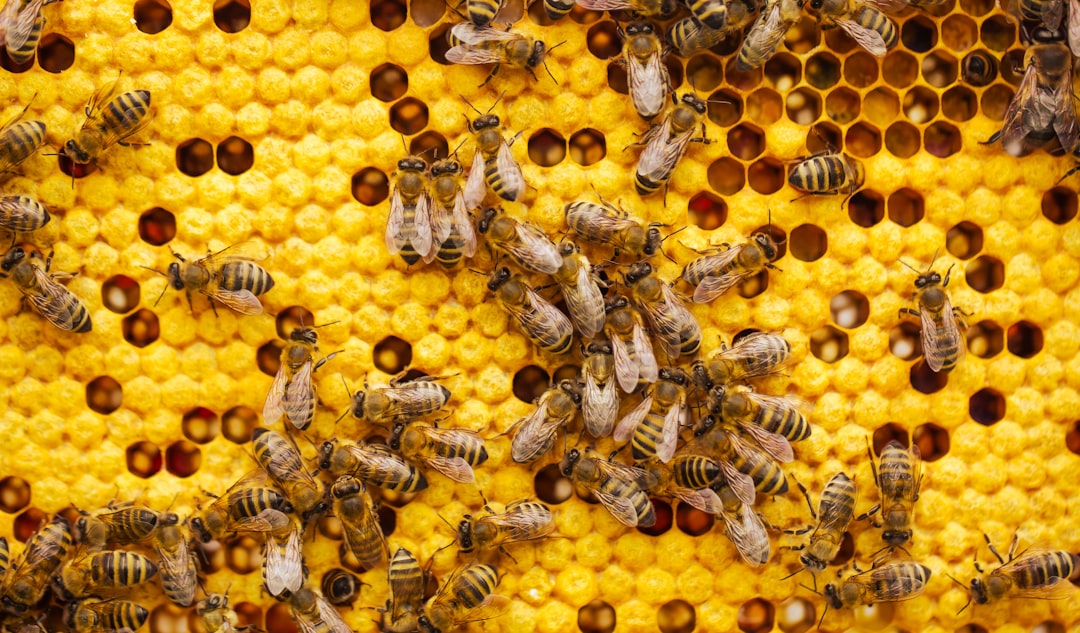
Photo by Unsplash Photographer on Unsplash
Why Hive Population Matters for Your Beekeeping Success
Bee population is the currency of beekeeping. A strong population produces surplus honey, defends itself against pests and disease, maintains hive temperature during winter, and generates the next generation of bees. A weak population struggles with every task: it can’t cap honey, can’t defend the colony, and often doesn’t survive winter. Yet many beekeepers never measure population in any systematic way, relying instead on vague impressions or checking once a season.
Population directly affects every outcome you care about. A hive with 30,000 bees in midsummer can produce 60 pounds of surplus honey; a hive with 10,000 bees in the same conditions might produce none. Population determines when your colony is ready to split for expansion. It signals whether a hive will survive winter or collapse in February. It tells you whether a queen is laying well or is failing. It predicts pest pressure: a weak hive gets crushed by varroa mites and robber bees, while a strong hive resists both.
The key insight is that bee population follows a predictable seasonal curve. Spring sees rapid population growth as the queen accelerates laying and winter bees die off. Summer brings the peak population, which then declines as brood stops and foraging bees exhaust themselves. By understanding this curve and measuring your actual numbers against it, you stop guessing and start managing with data. Research from Penn State College of Agricultural Sciences shows that hobbyists who monitor colony strength monthly make significantly better requeening and split decisions than those who inspect sporadically.
How Bee Population Changes Through the Spring and Early Summer
Spring is the most critical season for population growth. A colony that emerges from winter with 8,000 to 10,000 bees needs to reach 40,000 to 50,000 bees by late May to collect a honey crop. This explosion of growth happens fast: each frame of sealed brood produces roughly 3,500 bees, and during peak spring laying, a healthy queen can lay 2,000 eggs per day. If you do the math, that’s a frame of sealed brood roughly every four days.
The spring timeline matters because it’s compressed. January and February see minimal population as the cluster contracts and winter bees slowly age out. By mid-March in most regions, the queen restarts laying as day length increases and cluster temperatures rise above 57 degrees Fahrenheit. By April, the hive should show obvious population growth: each inspection reveals new sealed brood and emerging bees. By May, a strong colony will cover 8 to 10 frames with bees. By late May, it covers 10 to 12 frames and is ready for a medium super.
Early summer (June-early July) continues rapid growth. A queen in her prime lays at or near her maximum rate. Nectar flow, temperature, and daylight hours all encourage expansion. The hive’s population peaks in July, typically 60,000 to 80,000 bees in a thriving colony. This is your maximum working population for the season. The colony now has sufficient foragers to maximize honey collection, enough nurse bees to produce new brood, and enough builder bees to draw comb. Many beekeepers make the mistake of adding too many supers too late: by the time they add the third or fourth super, the nectar flow is half over, and the hive can’t fill all the available space.
The critical insight for spring is that population growth is cumulative and accelerating. A hive with 10,000 bees in April might seem small, but it’s right on schedule. By late April, that same hive should show 15,000 to 20,000 bees. If it hasn’t grown by two weeks later, something is wrong: the queen is failing, a disease is present, or the colony is queenless. You catch these problems only by tracking population changes, not by looking at the hive once and assuming all is well.
Managing Peak Population During the Productive Season
Mid-summer brings the colony to its productive peak. Now your management shifts from encouraging growth to maximizing honey storage and preventing swarming. A colony with 60,000 to 80,000 bees is at its most efficient for nectar collection. The workforce of 40,000+ foragers can exploit a good flow. The brood area remains strong, ensuring that the supply of foragers continues.
This is where hive population directly shapes your honey harvest. A colony that peaks at 50,000 bees produces less honey than one peaking at 70,000 bees, all else equal. To reach a strong peak, you must manage spring population carefully: no early splits, no requeening, no disruptions that set back growth. Some beekeepers split their colonies in May as a swarm prevention tactic, but this directly reduces peak population and cuts honey harvest by 30% to 50%. The tradeoff is intentional (you get two colonies and less honey per colony), but many beekeepers split without understanding this cost.
Population management in summer also prevents swarming. Overcrowding triggers the swarm impulse. A queen surrounded by congestion reduces laying, workers build comb in the brood box instead of the honey super, and swarming prep begins. The solution is simple: add space before congestion. Once a colony covers 8 to 9 frames in a 10-frame box with brood plus pollen plus honey, add the first super. Once the super is 40% full (four to five frames of nectar), add a second super. Good super management lets the population remain high without triggering crowding.
During peak season, the population actually includes a hidden component: drones. In June and July, a thriving colony may have 1,000 to 2,000 drones present. Drones consume resources but don’t forage or care for brood. A heavy drone population in a marginal colony can tip the balance toward failure. This is normal in strong colonies but a warning sign in weak ones. If you see lots of capped drone brood in a small colony, investigate further: check for a failing queen or a diseased hive.
Monitoring Your Hive Population: A Step-by-Step Guide
Accurate population monitoring requires a simple system you’ll use every two weeks during the active season. The goal is to count bees in a way that’s fast, reliable, and repeatable, not to achieve lab precision. Here’s the practical method for backyard beekeepers.
The frame-coverage method is the easiest way to assess population. It’s not an exact count, but it correlates tightly with actual bee numbers. You’ll frame covered on both sides. A frame fully covered front and back with bees holds roughly 3,000 to 3,500 bees. A box of 10 frames fully covered holds roughly 30,000 to 35,000 bees. By counting how many frames the colony covers, you estimate total population in minutes.
For more precision, use a Bee Hive Digital Population Counter Clicker to count bees on one or two frames, then multiply by the number of frames. This method takes longer but teaches you the actual numbers behind “frame coverage” and trains your eye to spot weak populations you might miss otherwise.
To inspect frames safely and assess population without harming bees, a Stainless Steel Bee Frame Holder Tool lets you work one frame at a time while keeping the remaining frames undisturbed. This reduces cooling loss and stress.
How to Monitor Bee Population: Step-by-Step Process
-
Plan your inspection schedule. Visit the hive every 10 to 14 days during the active season (March through September in most regions). Mark inspection dates on a calendar before the season starts. Consistency matters more than perfect timing, because you’re tracking trends.
-
Inspect brood pattern and population together. Open the hive on a warm day (above 65 degrees Fahrenheit), when most foragers are out. Remove the first frame (usually the outermost) to create working space. For each frame you examine, note (a) how many frames are covered with bees and (b) the brood pattern (solid, patchy, or sparse). Record this in a simple notebook or spreadsheet: date, number of frames covered, brood pattern, and any concerns. This takes 10 to 15 minutes per hive.
-
Count the number of frames fully covered on both sides. This is your population snapshot. In April, aim for 4 to 6 frames covered. In May, 6 to 8 frames. In June, 8 to 10 frames. If your count lags behind these benchmarks by more than a week or two, investigate: check for queen failure, disease, or insufficient food.
-
Track population changes week to week. Don’t judge a single inspection in isolation. You’re watching the trend. A colony at 6 frames covered in late April should be at 8 frames by early May. If it’s still at 6 frames two weeks later, population growth has stalled, and you need to diagnose the cause before it’s too late.
-
Use a Premium Glass Bee Hive Observation Window for quick hive checks between full inspections. This tool reduces hive disturbance and lets you spot catastrophic population loss (queenlessness, illness, absconding) without opening the hive. A quick glance every few days tells you if the colony is still growing or if something changed suddenly.
-
Record weather, nectar flow, and honey stores. Population trends interact with external conditions. A stalled population in May during a rainy spell is normal; the same stalled population during a good flow signals a problem. Notes on weather and flow help you interpret why population changed.
-
Compare your numbers to documented seasonal baselines. University of California Extension publishes typical population curves for different regions. An April colony in California should match different benchmarks than one in Maine. Use your region’s data as a reference, not a rigid rule.
Fall Population Decline and Preparing for Winter
As days shorten after the summer solstice (June 21), bee behavior changes dramatically. The queen begins laying fewer eggs. Workers prepare for winter by excluding drones and reducing the brood area. Population, which peaked at 60,000 to 80,000 bees, now declines. This is normal and necessary.
The fall decline follows a predictable curve. July remains at peak. By August, population edges downward as the queen slows laying. By September, brood area shrinks noticeably, and the colony has 40,000 to 50,000 bees. By October, depending on your latitude, population may be at 30,000 to 40,000. By November, it drops to 20,000 to 30,000. This final cluster, roughly three frames of bees, is your winter population and determines whether the colony survives.
The critical mistake is confusing healthy decline with collapse. Many beekeepers panic when they see population drop in August, assuming disease or queenlessness has struck. In reality, the colony is responding correctly to seasonal signals. A more reliable indicator is whether sealed brood exists. A colony with 30,000 bees but no sealed brood is preparing for winter correctly. A colony with 30,000 bees but lots of sealed brood (in October or November) is queenless, as the queen should have shut down laying weeks ago.
Fall population also determines overwintering success. A colony with fewer than 3 frames of bees (roughly 9,000 bees) going into winter faces poor odds in most climates. It can’t generate cluster warmth, doesn’t have enough bees to survive attrition, and struggles if a mid-winter brood break weakens it further. A colony with 4 to 5 frames of bees has much better survival odds. This is why fall feeding and population monitoring are critical: if your hive is light on bees by October, you must boost it (through a strong early-fall flow or emergency feeding) or face winter loss.
The timeline for fall preparation is compressed. You have roughly six weeks from late August to mid-October to ensure your colony has adequate population and food stores before winter. If a hive is small in August, you can split it away (to preserve resources for the stronger colony) or feed heavily to boost population. But by October, the decision is made: if the hive is small, it will likely perish.
Common Population Management Mistakes and How to Avoid Them
Mistake 1: Not inspecting until summer. Many beekeepers skip spring inspections, then discover in June that their hive swarmed, went queenless, or collapsed from disease. By then, recovery is nearly impossible. Instead, begin inspections as soon as nighttime temperatures stay above 50 degrees Fahrenheit (late February in mild climates, late April in cold ones). Two quick spring inspections catch problems early.
Mistake 2: Splitting a hive without understanding the population cost. A spring split halves your colony’s population right when growth is critical for a honey crop. If you split a 20,000-bee colony in May, each resulting hive starts at 10,000 bees. The mother colony recovers to 40,000 by August and may produce 20 pounds of honey. Without splitting, that original hive reaches 70,000 bees and produces 60 pounds. Many beekeepers split without knowing their actual population, so they divide a smaller colony than they thought and end up with two failing hives instead of one strong one.
Mistake 3: Adding supers too late or too early. Add the first super when the brood area is 75% covered with bees and the colony has a good lay of brood. Too early (in a weak April colony), and the bees can’t fill it, resources spread thin, and warmth dissipates. Too late (in June after nectar stops), and the colony can’t backfill it. The rule is simple: add space one frame ahead of population. If the hive covers 8 frames, add a super. Don’t wait until it covers all 10 and looks crowded.
Mistake 4: Misinterpreting a failing queen as normal population dip. In late June or early July, a worn queen’s laying rate drops sharply. Population declines fast. Many beekeepers assume fall is arriving and prepare for winter. Instead, the queen is failing, and the colony will never build back up. Watch brood pattern: a healthy queen maintains a solid pattern even as numbers dip. A failing queen leaves very patchy brood, with gaps and scattered eggs. If brood pattern degrades, requeue immediately rather than waiting.
Mistake 5: Ignoring population trends and focusing only on snapshots. A single inspection showing 5 frames covered tells you almost nothing. Context is everything. Five frames in late April is good progress; five frames in late May is a crisis. Five frames in August is normal decline; five frames in June is a disaster. Record every inspection and track the trend across weeks. A colony dropping from 10 frames to 5 frames in two weeks is sick. A colony dropping from 10 frames to 8 frames in two weeks is fine.
Mistake 6: Requeening healthy colonies due to misdiagnosed population loss. Weather matters enormously. A cool, wet May suppresses foraging, and bees stay clustered around brood instead of spreading across frames. A beekeeper inspecting that hive might think population is low, when in reality the bees are there—just concentrated. Instead of requeening, wait for warmth and a nectar flow. Population will spread out, and the colony will recover without intervention.
Frequently Asked Questions About Hive Population
Q: What’s the minimum population to survive winter?
A strong overwintering colony has at least 3 to 4 frames of bees (9,000 to 12,000 bees) in November, depending on your climate. In mild regions (USDA zones 7 and warmer), 3 frames is acceptable. In cold regions (zone 6 and colder), aim for 4 to 5 frames. A colony with fewer than 3 frames faces poor odds because it can’t generate sufficient cluster warmth, and any winter losses (disease, starvation, or cold exposure) push it below the critical threshold. Additionally, the quality of bees matters: a cluster of well-fed, disease-free bees survives better than a cluster of malnourished, varroa-infested bees. Adequate food stores are just as important as population. A hive with 40,000 bees but only three months of honey stores will starve, while a hive with 20,000 bees and eight months of stores survives. Use a Stainless Steel Bee Frame Holder Tool to inspect frames side-by-side and assess stores and population simultaneously.
Q: Can I increase population quickly if my colony is weak?
Short answer: not reliably. If a colony falls behind in spring population growth due to a failing queen, disease, or late start, recovery is difficult. You can remove the queen and introduce a new one (requeening), which works if the problem was queen failure. You can feed protein (pollen patties) to stimulate the queen’s laying, which helps but adds days or weeks to recovery. You can avoid any splits, checks, or disruptions to conserve population. But you cannot force a weak colony to catch up to a strong one if the problem is fundamental (like a disease). The better strategy is prevention: monitor spring population carefully and requeue early if growth stalls, before the colony falls too far behind. A well-managed colony grows steadily from April onward and never needs emergency recovery.
Q: How do I know if population loss is normal decline or a sign of disease?
Population loss in August or September is normal. Loss in April, May, or June is not. Examine the brood pattern: solid brood with few gaps suggests a healthy queen and normal laying; spotty brood with lots of empty cells suggests disease (especially American foulbrood if you see sunken or dark brood caps) or a failing queen. Check for the smell: healthy brood smells faintly sweet and yeasty. Diseased brood (particularly American foulbrood) smells unpleasant or sour. Check for live mites: brush 300 bees into a white container half-filled with alcohol, shake vigorously, and pour through a strainer. Count the mites. More than 3 to 5 mites per 300 bees (or 1% to 2% infestation) suggests varroa mites are damaging the hive. A combination of population loss, spotty brood, and high mite counts points to disease or pest pressure, not normal decline. Consult your state’s apiary inspector or Dadant & Sons, a longtime beekeeper resource, for confirmation.
Q: Should I combine two weak colonies instead of letting them fail?
Yes, often. If you have two colonies, each with 2 frames of bees in October, combining them creates one colony with 4 frames of bees, which has much better survival odds. Combine them in October before winter, not in spring when population is rebuilding. Use the “newspaper method”: place sheets of newspaper between the two hive bodies, staple the edges, then place the stronger colony’s box on top. The bees will chew through the paper over a week, allowing them to merge gradually without fighting. The combined colony will have a single queen (destroy the weaker queen from the smaller colony first to prevent fighting). This conserves both populations and gives you one strong hive rather than two weak ones that both likely fail.
Conclusion
Reading your hive’s population is both art and science. The science is straightforward: learn the seasonal curve, measure population consistently, and recognize warning signs. The art is knowing what to do with that information. A weak colony in April might recover with time and a warm flow; a weak colony in August facing a failed queen should be requeened or combined now, not left to fail. Population data alone doesn’t make decisions—your judgment does. But without population data, your judgment is just guessing.
Start this season by committing to a simple inspection schedule: every two weeks during the active season, assess how many frames your colony covers and record the number. Notice whether the population is growing on schedule or falling behind. By mid-August, you’ll have a clear picture of which colonies will survive winter and which are at risk. Make requeening or combination decisions based on fact, not fear. Next year, you’ll harvest more honey, raise healthier bees, and lose fewer colonies to preventable problems.
Keep a beekeeping notebook handy. Take 15 minutes every two weeks to inspect, count, and record. The patterns will reveal themselves.
Related Reading
For deeper dives into hive structure and inspection, read our guide on top bar hive management, which covers detailed frame inspection technique, and how to split a hive to prevent swarming, which explains the population tradeoffs of spring splits.