Best Honey Extractors for Small-Scale Beekeepers: What's Worth Buying
This post contains affiliate links. As an Amazon Associate, I earn from qualifying purchases at no extra cost to you.
Before you uncap your first frame, you’ll need a quality uncapping fork, which costs well under $15 and lets you scratch open sealed cells without tearing apart drawn comb. That part is inexpensive and simple. The extractor decision carries more weight: the machine you choose sets the pace and physical demand of every harvest session you’ll run from that point forward, and the wrong choice means either outgrowing it quickly or grinding through long harvest days with a unit that does not fit your operation.
For beekeepers running one to six hives, three extractors deserve serious consideration: a 2-frame manual unit for lighter-duty operations, a 3-frame hand-crank that hits the sweet spot for most hobbyists, and a 4-frame radial for anyone moving toward meaningful small-scale production. If you are still working out when to pull frames before investing in hardware, the guide on understanding honey extraction and when to harvest is worth reading first.
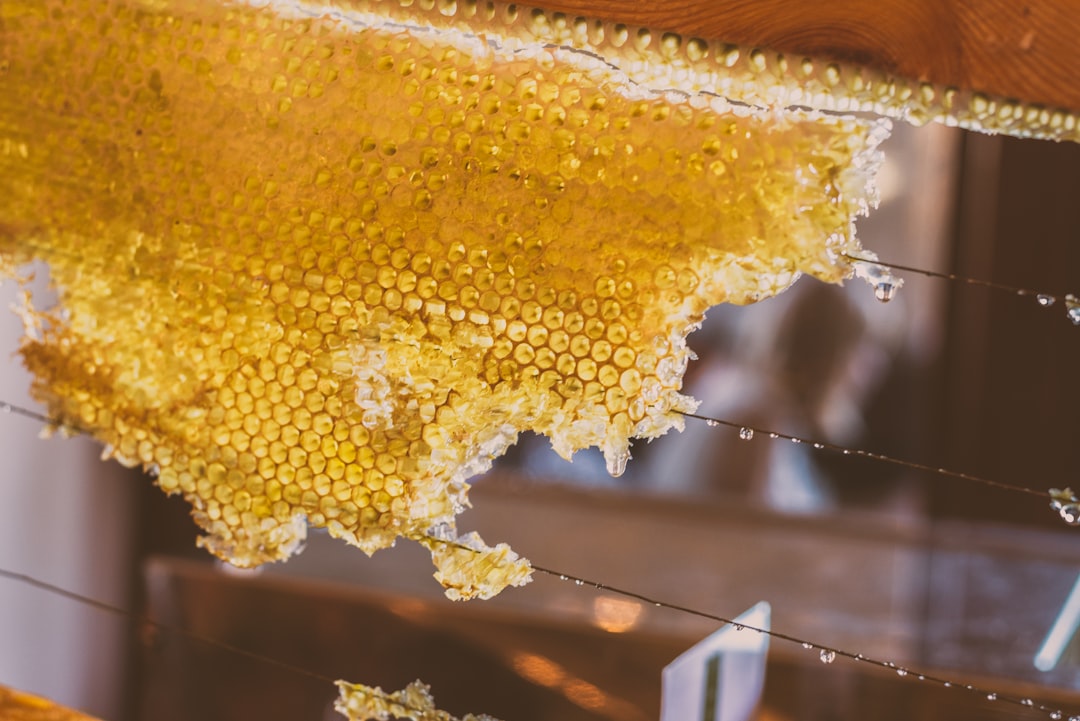
Photo by Jez Timms on Unsplash
Why Your Extractor Choice Matters More Than It Looks
Most hobbyist beekeepers treat the extractor as a downstream concern, something to figure out after brood management, queen issues, and mite loads are under control. That approach is understandable in the first season. By the second season, with two or more hives ready to yield and no clean extraction plan, the gap becomes costly in time, honey, and damaged comb.
The extractor you buy shapes every harvest session from the point of purchase forward. A unit too small for your hive count means running extraction cycles for five or six hours instead of two. A unit with poor comb cage geometry breaks new drawn comb on the first spin, setting your wax reserves back by an entire season. A unit made from substandard materials corrodes, imparts off-flavors, or develops bacterial buildup in rough weld seams that cannot be properly sanitized.
Build material is where the sharpest quality divide exists at the hobbyist price point. Stainless steel food-grade construction, specifically 201 or 304 grade, is the baseline that established equipment suppliers like Mann Lake hold to for honey-contact surfaces. Food-grade stainless resists corrosion under repeated washing, does not impart flavor or odor to honey, and holds up across years of seasonal use. Painted steel or plastic drums exist at the lowest price points, but they create sanitation problems and degrade faster than their upfront savings justify. For any piece of equipment in direct contact with your harvest, buy stainless and do not compromise on that.
Frame compatibility is the second variable to confirm before ordering anything. Standard Langstroth equipment comes in deep, medium, and shallow depths. Most backyard beekeepers run deep brood boxes and medium or shallow honey supers. Not every extractor cage accommodates all frame depths: some units sold as accepting “standard” frames are actually optimized for mediums, leaving deep super frames undersupported during the spin and extracting unevenly. Confirm your specific frame dimensions against the cage specifications for any unit you are considering, not just the general category description in the product listing.
The rent-versus-own decision resolves cleanly around hive count and harvest frequency. If you keep one hive and extract once per year, club rental makes sense. At two or more hives, especially if you harvest twice a season, owning your own equipment pays off within two to three years and eliminates the scheduling problem that shared gear creates. Rental equipment is never available exactly when your bees are ready, and harvest timing is driven by your bees, not the club calendar.
Tangential vs. Radial: The Design Difference That Affects Every Harvest
Every honey extractor operates on the same centrifugal principle: frames spin inside a drum, centrifugal force pulls honey out of the comb and down the drum walls, and the honey pools at the base for draining. The meaningful design divide is in how frames are oriented inside the drum during that spin.
In a tangential extractor, frames mount parallel to the drum wall with their faces pointing outward. Centrifugal force extracts honey efficiently from the outward-facing side, but the inward-facing side has honey pressing against the back of the cells instead of flying free. To fully extract both sides, you stop the extractor partway through each cycle, flip every frame 180 degrees, and run it again. For a 3-frame tangential unit, that means three flips per batch, adding a few minutes per cycle but giving you precise control over the speed applied to each comb face.
In a radial extractor, frames mount like spokes on a wheel with the top bar pointing outward toward the drum wall and the bottom bar pointing toward the center. The centrifugal force during spin acts perpendicular to the comb face on both sides simultaneously. Both sides extract at once with no flipping required. Radial extraction runs faster per batch, handles comb more gently because force distribution is even across the frame, and reduces total session time noticeably as frame count increases. The tradeoff is that effective radial extraction requires more sustained rotational velocity, which means more consistent cranking effort on a manual unit.
For small-scale beekeepers, this choice comes down to volume and temperament. At one to two hives producing 30 to 60 pounds per season, a tangential 2 or 3-frame unit is fully adequate. The flipping cadence becomes practiced quickly and provides natural rest points in what is otherwise a physically active session. At three hives or more, particularly when you’re pulling multiple supers per colony, the no-flip advantage of radial extraction starts saving meaningful time per session.
Comb age matters here too. New drawn comb in its first season is fragile and prone to blowout at high speeds. A tangential extractor gives you the option to run slowly on the heavily loaded first side and then increase speed on the second pass when the remaining honey is lighter and the cell structure is under less mechanical stress. Radial extractors distribute force more evenly across both faces, which is gentler on mature comb over multiple seasons, but brand-new comb still demands a cautious start speed on any design.
The Best Honey Extractors for Small-Scale Beekeepers: Three Picks Worth Your Money
These three units cover the realistic range of what a backyard beekeeper or small-scale producer actually needs. All are stainless steel, all are manual hand-crank designs, and all are sized appropriately for hobbyist rather than commercial output. Here is what each one is built for and who should buy it.
VIVO Stainless Steel 2-Frame Honey Extractor
The VIVO Stainless Steel 2-Frame Honey Extractor is the right pick if you are running one hive, possibly two, with annual honey production in the 20 to 50 pound range. It is a tangential hand-crank design with a stainless drum and frame cage, an integrated honey gate at the base, and legs sized to clear a standard five-gallon bucket positioned underneath for direct drain-off. The footprint is compact enough for a workbench setup or tight garage space without requiring a dedicated extraction area.
At two frames per cycle, this unit handles one-to-two-hive volumes without demanding an all-day session. Where it shows its limits is when you push to three or more hives, or when you’re pulling more than 10 to 12 frames in a single harvest. At that volume, the two-frame cycle becomes a genuine bottleneck that extends your day considerably. For the dedicated single-hive beekeeper with no near-term expansion plans, that ceiling is not a problem. If you are already thinking about adding a second or third hive, size up now rather than buying the VIVO and replacing it next season.
Honey Keeper Stainless Steel 3-Frame Manual Hand Crank
The Honey Keeper Stainless Steel Honey Extractor 3 Frame Manual Hand Crank is the best all-around value in this category for beekeepers running two to four hives. It is the unit most hobbyists should default to if they are not certain which size fits them, because it covers the most common hobbyist scale without requiring you to step up to radial design or a larger footprint.
The practical difference between two frames and three is more significant than it sounds. If you are pulling six-frame honey supers off two hives, a 2-frame extractor requires three full cycles per super. The Honey Keeper’s 3-frame capacity cuts that to two cycles, reducing your extraction time by roughly a third for the same volume of honey. Over a full harvest day, that improvement registers clearly in both time and physical output. Build quality is solid at this price point: stainless drum and cage, a functional honey gate, and a stable base that keeps drum vibration manageable during extraction.
Goodland Bee Supply Radial Honey Extractor 4 Frame
The Goodland Bee Supply Radial Honey Extractor 4 Frame operates in a different practical category from the two tangential units above. This is a radial extractor: frames load like spokes, both comb faces extract simultaneously, and you never stop to flip. For a beekeeper running three to six hives with meaningful honey yields per colony, this is the machine that makes harvest day sustainable as a solo operation.
The no-flip advantage compounds across a long session. At five hives with two full supers each, a tangential workflow becomes physically punishing in a way that radial extraction avoids. The Goodland’s drum is larger than both competing units, which means it takes up more floor space and requires a more dedicated extraction area, but it also holds more honey in the drum before you need to open the gate and drain, which allows for longer uninterrupted cycles.
Pick up the Goodland if you are already at three hives, plan to scale further in the next season or two, or find that extended tangential sessions are taking a physical toll that limits how much you enjoy harvest day.
How to Choose the Right Honey Extractor: A Decision Framework
The most reliable single predictor of which unit fits your operation is current hive count, adjusted for where your setup will realistically be in two to three seasons. Do not overbuy for an expansion that may not happen on schedule. Do not underbuy in a way that forces an equipment replacement the following season.
| Criteria | VIVO 2-Frame | Honey Keeper 3-Frame | Goodland 4-Frame Radial |
|---|---|---|---|
| Best for hive count | 1-2 hives | 2-4 hives | 3-6 hives |
| Annual honey estimate | Under 60 lbs | 40-120 lbs | 80-200 lbs |
| Extraction type | Tangential | Tangential | Radial |
| Frame flipping required | Yes | Yes | No |
| Footprint | Small | Medium | Larger |
| Physical effort per session | Low-moderate | Moderate | Higher at full load |
| Frame depth compatibility | Deep, medium | Deep, medium | Deep, medium |
| Price tier | Entry | Mid | Mid |
The annual honey volume ranges in this table overlap intentionally because productivity varies widely by forage density, colony strength, and local nectar flow patterns. A single strong hive in a productive location can yield 80 to 100 pounds in a good year. A hive in a low-forage suburban environment may produce far less. Use these figures as planning benchmarks and check with local keepers about realistic yields for your specific area before making a capacity decision based solely on the numbers above.
If the choice between the Honey Keeper and the Goodland is not obvious from hive count, your preference for the tangential stopping-and-flipping rhythm versus continuous radial spinning is a legitimate tiebreaker. Some beekeepers find the control and natural rest intervals of tangential extraction genuinely preferable. Others find the interruptions frustrating when they want to build momentum through a long session. Neither position is wrong.
One check you should complete before ordering: verify your actual frame depth dimensions against the extractor cage specifications listed by the manufacturer. Dadant documents their frame specifications in detail on their equipment pages, which is useful if you run Dadant-standard equipment or need to cross-reference a specific frame depth against cage clearance dimensions. Do not assume compatibility from a general product description in a listing.
Setting Up and Running Your Extractor Correctly
A honey extractor that is properly prepared and run with attention to detail extracts more honey per frame, preserves more drawn comb for reuse, and produces less cleanup work at the end of the day. These steps apply to all three units reviewed here.
-
Wash and sanitize before first use. Even a brand-new stainless extractor should be washed with hot water and food-grade dish soap before it contacts honey. Rinse thoroughly and allow the drum to air dry completely before use. Do not use bleach or abrasive scrubbing pads on stainless steel honey-contact surfaces. Bleach can cause surface pitting and leave trace residues, and abrasive pads create micro-scratches that harbor bacteria and complicate future sanitation.
-
Warm your extraction space and frames to 80 to 90 degrees Fahrenheit. This is the single highest-impact preparation step and the one most commonly skipped. Honey at 60 degrees Fahrenheit is thick, slow-moving, and clings to cell walls through multiple spin cycles. The same honey at 85 to 90 degrees flows freely, extracts more completely in fewer revolutions, and moves through your strainer significantly faster. Bring capped frames into a warm room 12 to 24 hours before extraction if possible, or heat your garage or extraction space with a space heater before you start. The yield difference between cold and warm honey is large enough that skipping this step is effectively leaving honey in the frames.
-
Level the extractor on a stable, non-slip surface. An unlevel extractor wobbles during spinning, causing uneven extraction across the frame batch, increasing stress on the drum bearings and base hardware, and generating noise that worsens as load increases. Use a small spirit level to check, then shim the feet or adjust them until the unit sits flat. Stability matters more as the number of loaded frames increases.
-
Uncap all frames before loading. You’ll need to remove wax cappings from sealed honeycomb before frames go into the extractor. An uncapping knife, uncapping fork, or roller scratcher all accomplish this. Cut or scratch close to the comb surface without digging into the cells. Hold each frame over an uncapping tank or tray to catch cappings and residual drip honey. Let the cappings drain before you process or discard the wax.
-
Load frames with proper orientation and build speed gradually. For tangential extractors, load frames with the uncapped face pointing outward toward the drum wall. Start the crank slowly for the first 30 to 60 seconds, then increase speed gradually over the next minute. Resist the urge to spin at full speed immediately, especially with new or fragile comb. For the Goodland radial, load frames evenly around the cage spokes and build speed the same way. Watch for honey appearing on the drum walls and running down toward the base pool.
-
Flip frames and run the second side (tangential units only). Once the outward-facing side looks visually clear of honey, stop the extractor and flip each frame 180 degrees so the other uncapped face now points outward. Start slow again on the second side. The second side typically extracts faster because the remaining honey load is lighter and the comb is under less mechanical stress.
-
Drain through a fine-mesh strainer into your settling bucket. Open the honey gate and let honey flow through a double-layer fine-mesh stainless strainer into your bottling or settling bucket. Do not skip the strainer even when honey looks clean. Sealed frames still carry wax particles, fine debris, and air bubbles that reduce finished honey quality and clarity. During long sessions, plan to clean or swap the strainer at least once as wax buildup begins to slow flow.
-
Wash the extractor the same day you use it. Fresh honey rinses out of a stainless drum easily. Honey that cools overnight and begins to crystallize inside the drum becomes substantially harder to remove and can affect the drum’s long-term hygiene. Drain completely, rinse with warm water immediately after your session ends, then wash with food-grade dish soap, rinse clean, and air dry before storing.
Common Mistakes to Avoid When Using a Honey Extractor
Even a well-chosen extractor produces poor results when run incorrectly. These are the mistakes that cause the most harm for hobbyist beekeepers, ordered roughly by how frequently they occur and how much they cost in honey, comb, or equipment.
Spinning too fast on new comb. New drawn comb in its first season is fragile under centrifugal stress. Full-speed cranking from a dead stop will collapse cells, throw wax chunks into your honey pool, and ruin frames that an entire season of bee work built. Those wax chunks require extra straining to remove, and the damaged frames cannot be cleanly reused. Start every session slowly, particularly when working with young or lightly built comb. Two minutes of gradual speed increase at the start of each cycle is the minimum protection against this, and it costs you nothing.
Extracting cold honey in a cold space. Honey at 60 degrees Fahrenheit is thick enough to cling to cell walls through a full spin cycle, meaning you are cranking longer and still leaving honey behind. Beekeepers who skip the warm-up step tire themselves out faster, extract less honey per frame, and often attribute the shortfall to their extractor rather than to preparation. Warming frames overnight and heating your extraction space before you start is the single easiest improvement available. It adds no equipment cost and meaningfully increases your yield.
Unbalanced frame loading on tangential units. A 2 or 3-frame tangential extractor requires balanced weight distribution across the cage. Loading one heavy full frame on one side with the opposite slot empty creates dangerous wobble during spinning, stresses the unit’s bearings and base, and produces uneven extraction across the batch. Always pair frames by approximate weight. If you have an odd frame remaining, balance the empty slot with a nearly spent frame or an actual empty frame to keep the drum centered.
Skipping the frame compatibility check. Not every extractor cage accepts every frame depth, and discovering this on harvest day is entirely avoidable. Deep frames sitting in a cage sized for mediums may press against the drum wall during spin or fail to seat correctly in the cage basket. Shallow frames in a deep cage may wobble or extract unevenly. Check your actual frame dimensions against the extractor’s stated specifications before your first session.
Running honey without a strainer. Direct-from-gate honey looks clean but carries wax particles, fine bee debris, and air bubbles that affect finished honey quality and shelf clarity. A double-layer fine-mesh stainless strainer between the extractor gate and your settling bucket removes all of this. During a long session, plan to clean or replace the strainer at least once as wax accumulation slows flow. Let gravity do the work; do not press or force honey through a clogged mesh.
Leaving the extractor uncleaned overnight. Honey begins crystallizing faster than most beekeepers expect once it is separated from comb. Residual honey in the drum, around the gate valve, and in the base pooling area can begin to set in a cool space within hours. Cleaning crystallized honey off a stainless drum takes dramatically more time and effort than washing fresh honey out immediately after harvest. Build the cleanup into the harvest day itself, not the following week.
FAQ
Do I need an electric honey extractor if I only keep a few hives?
For most beekeepers running under five hives, electric extraction is unnecessary and adds cost and complexity without meaningful benefit at that scale. Manual and hand-crank extractors handle the volumes that hobbyist operations produce, and properly warmed honey extracts just as completely under hand-crank power as under a motor. Electric extractors earn their place when you are extracting continuously for four or more hours, running enough frames that hand-cranking becomes unsustainable across the session, or managing a physical limitation that makes extended cranking difficult. At the sideliner level, generally ten hives or more, the time savings from a variable-speed motor become genuinely significant and begin to justify the added cost and maintenance. Below that threshold, a well-prepared manual session with warm honey, a stable setup, and proper technique produces equivalent extraction results. The three units reviewed here are manual because that design matches the hobbyist scale they are built to serve.
Can I use these extractors with both deep and medium Langstroth frames?
All three units are listed as compatible with standard deep and medium Langstroth frames, but you should verify your specific frame dimensions against the cage specifications before ordering. Frame dimensions vary slightly between manufacturers, and what a listing calls a “deep” frame covers a range of actual measurements depending on the brand you run. Most extractors in this class are designed around standard Langstroth deep dimensions, and medium frames typically sit in the cage with some additional clearance, which is generally workable for extraction purposes. Shallow frames are less consistently accommodated across the category; if you run shallow honey supers, confirm that shallow compatibility is explicitly listed for any unit you are considering. Do not make purchase decisions based on general category descriptions alone. Look for the stated frame depth range in the product specifications or verify directly with the manufacturer before your first harvest session.
How do I keep extracted honey from crystallizing too quickly in the bottle?
Crystallization is driven primarily by the glucose-to-fructose ratio of the nectar source and by storage temperature. Honey stored below 60 degrees Fahrenheit crystallizes significantly faster than honey held at room temperature. After extraction, let your honey settle and off-gas in a sealed bucket at room temperature for 24 to 48 hours before bottling. Store finished jars between 65 and 75 degrees Fahrenheit and away from direct light and temperature swings. Fine filtration before bottling removes some wax particles and pollen that act as crystallization nuclei, which can modestly slow the onset. If crystallization does occur in the bottle, it signals natural sugar content rather than a quality defect. Reliquify crystallized honey gently by placing the jar in warm water held below 110 degrees Fahrenheit. Heating above that threshold begins to degrade heat-sensitive enzymes and can alter flavor and aroma in ways that are difficult to reverse.
Conclusion
For most backyard beekeepers, the Honey Keeper 3-Frame is the right starting point: enough capacity for two to four hives, solid stainless construction, and a price that makes sense without overbuying. If you are genuinely keeping one hive with no near-term expansion plans, the VIVO 2-Frame handles the job for less. If you are already at three hives or more and finding harvest sessions exhausting and overlong, the Goodland 4-Frame Radial is the machine that changes the equation and makes extraction something you look forward to rather than endure.
Your next step is concrete: count your current hives, count your honey supers, confirm your frame depths, and order the unit that fits. Do not spend another harvest season using borrowed equipment that may not fit your frames and is never available when your bees are ready. The right extractor pays for itself quickly and makes every session that follows easier than the one before.