Understanding honey extraction: when and how to harvest
This post contains affiliate links. As an Amazon Associate, I earn from qualifying purchases at no extra cost to you.
The culmination of a beekeeping season is the honey harvest, but success is not guaranteed simply because your supers are full. Extracting honey is a high stakes operation where poor timing or improper technique can lead to fermented crops, starving colonies, or a literal sticky mess that invites every pest in the neighborhood. You must approach the harvest with a balance of patience for the bees to finish their work and decisiveness to pull the honey before the weather turns or the nectar flow completely dries up. The goal is to maximize your yield without compromising the health of the hive or the quality of the final product.
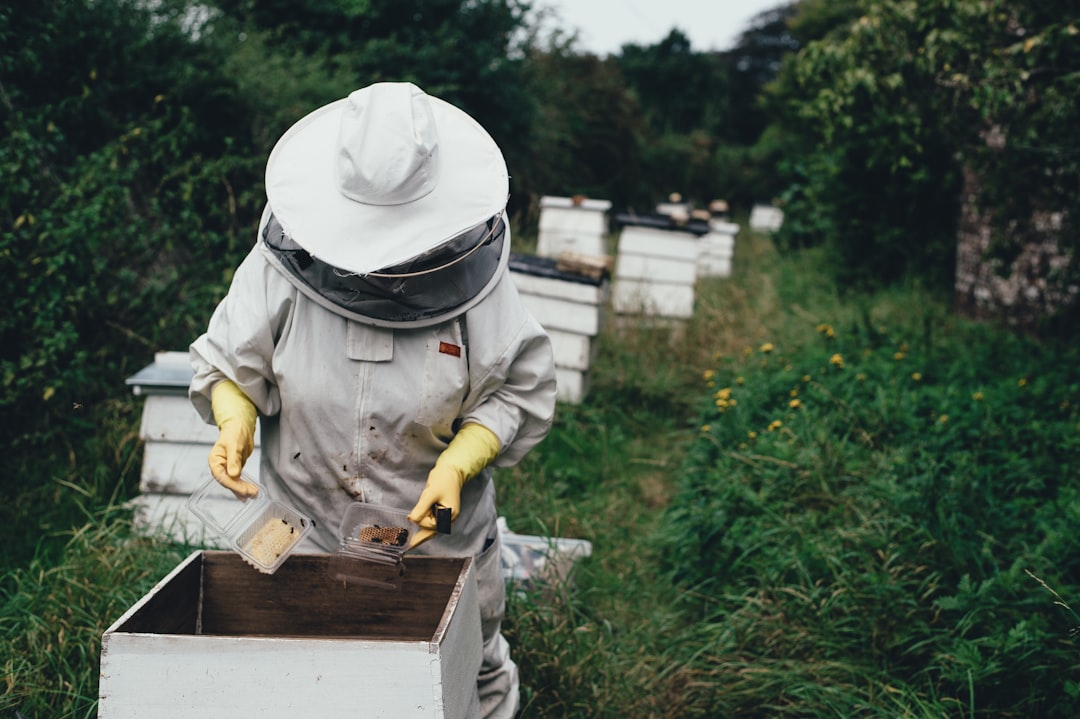
Photo by Unsplash Photographer on Unsplash
Timing the Harvest: When is the Best Time for Honey Extraction?
Determining the exact moment to pull your honey supers requires observing both the hive’s internal progress and the external environment. Generally, the honey harvest occurs in late summer or early autumn, but this varies significantly based on your local climate and the specific floral sources available to your bees. The primary indicator that honey is ready for extraction is the presence of wax cappings. Bees cap honey cells with wax only when the moisture content has been reduced to approximately 18 percent or lower. If you harvest honey that is uncapped, the moisture content is likely too high, which leads to yeast growth and fermentation inside the jar.
A reliable rule of thumb is the 80 percent rule: do not pull a frame for extraction unless at least 80 percent of the cells are fully capped with wax. If you are in a high humidity environment, you should aim for closer to 90 or 100 percent capping. You can perform a “shake test” on frames with uncapped cells by holding the frame horizontally and giving it a firm downward shake. If nectar splashes out, the moisture content is too high, and the bees need more time to dehydrate it. If the liquid stays put, it may be stable enough to harvest, though relying on wax cappings is always the safer bet for long term storage.
Environmental factors also dictate your timing. You must pull your honey supers before the temperature drops significantly. Cold honey is viscous and difficult to extract, often leading to damaged wax comb as the centrifugal force struggles to pull the thick liquid from the cells. Furthermore, you must ensure the bees have enough time to reorganize the brood nest and store adequate winter reserves after you have taken your share. Taking honey too late in the season can leave the colony vulnerable if they cannot find enough late season forage to replace what you removed. Monitor the local forage reports and the behavior of your bees; once the main nectar flow ends and the bees start becoming more protective or “robby,” it is time to conclude the harvest.
Essential Equipment for a Successful Honey Extraction Process
Efficiency in the honey house depends entirely on having the right tools prepared before the first frame is pulled. For a hobbyist with one to five hives, a VEVOR 2/4 Frame Manual Honey Extractor is the most practical and cost effective choice. While electric extractors save physical labor, a manual model allows for precise control over the speed, which is critical when dealing with fragile new wax foundation that can blow out under too much centrifugal force. The extractor works by spinning the frames, forcing the honey out of the cells and onto the inner walls of the drum, where it then drains to the bottom.
Beyond the extractor, you need a dedicated space for uncapping. This usually involves an uncapping tank or a simple plastic tub with a crossbar to support the frame. You will use either a heated uncapping knife or a cold serrated knife to remove the wax cappings. A heated knife is often preferred because it slides through the wax like butter, reducing the amount of jagged edges and preserving more of the comb structure. However, a simple uncapping fork or “scratcher” is also necessary for reaching low spots or uneven areas of the comb that a flat knife might miss.
Filtering is the final stage of the mechanical process. You do not want wax bits, bee parts, or propolis in your finished jars. Most beekeepers utilize a multi stage filtration system. This starts with a coarse filter to catch large debris and ends with a Little Giant Electric Uncapping Knife that ensures a clear, professional appearance. For the highest clarity, a VIVO Stainless Steel Honey Strainer Double Sieve is the standard for removing even the smallest particles of dust or pollen without stripping the honey of its natural characteristics. Ensure all equipment is made of food grade stainless steel or high density polyethylene to prevent contamination.
Step-by-Step Guide to the Honey Extraction Process
Extracting honey is a messy, multi hour task that requires a systematic approach to prevent cross contamination and maximize yield. You should set up your extraction area in a bee tight room, such as a kitchen or a sealed garage, to avoid attracting foraging bees that will quickly turn your harvest into a chaotic robbing event.
- Remove Bees from the Supers: Before you can extract, you must clear the bees from the honey supers. You can use a bee brush to manually sweep bees off each frame, but this is time consuming and can agitate the colony. A more efficient method is using a triangle escape board or a fume board with a bee repellent. Place the escape board under the honey supers 24 hours before you plan to harvest; the bees will move down into the brood nest and be unable to return.
- Uncap the Frames: Once the supers are in your workspace, take a frame and place it on the uncapping stand. Using your uncapping knife, slice upward starting from the bottom of the frame, keeping the blade just beneath the wax cappings. Aim to remove only the wax seals while leaving the cell walls intact. Use an uncapping fork to scratch any missed cells in the depressions of the comb.
- Load and Spin the Extractor: Place the uncapped frames into the VEVOR 2/4 Frame Manual Honey Extractor. It is vital to balance the extractor; if you have one heavy frame and one light frame, the unit will vibrate violently. Start spinning slowly. If you are using a tangential extractor (where one side of the frame faces the wall), spin out about half of the honey from the first side, flip the frames, spin out all the honey from the second side, and then flip back to finish the first side. This prevents the weight of the full side from crushing the empty side into the frame basket.
- Filter and Settle: Open the honey gate at the bottom of the extractor and let the honey flow through your Little Giant Electric Uncapping Knife into a food grade bucket. Once the bucket is full, let it sit for 24 to 48 hours. This “settling” period allows air bubbles and the tiniest wax fragments to rise to the top as a foam, which can then be skimmed off before bottling.
Safety Warning: Honey extraction involves heavy lifting, as a full 10-frame medium super can weigh over 50 pounds. Use proper lifting techniques to avoid back injury. Additionally, ensure all surfaces and tools are cleaned with food-safe sanitizers. If you are using a heated uncapping knife, never leave it unattended, as it can reach temperatures high enough to cause burns or scorch the honey.
Managing Moisture Content and Food Safety Standards
The quality of your honey is defined by its stability and purity. According to the USDA Honey Grading Standards, Grade A honey must have a moisture content of less than 18.6 percent. Anything higher than this threshold is technically at risk of fermentation. When honey ferments, it develops a sour smell and a bubbly texture, rendering it unsalable and unpalatable. If you suspect your honey is borderline, you should invest in a honey refractometer to get a precise reading before you commit to bottling.
To maintain food safety, the environment where you extract must be kept at a controlled temperature. Ideally, the room should be between 70 and 80 degrees Fahrenheit. If the room is too cold, the honey will not flow through the VIVO Stainless Steel Honey Strainer Double Sieve effectively, leading to clogs and frustration. If the room is too hot, you risk melting the wax combs or degrading the delicate enzymes and flavor profiles of the honey.
Cleanliness is the other pillar of food safety. All buckets, extractors, and knives must be thoroughly washed and dried before use. Any water introduced into the honey during the extraction process will raise the moisture content and increase the risk of spoilage. Use only food grade containers for storage. Avoid using metal containers that are not stainless steel, as the acidic nature of honey (pH between 3.4 and 6.1) can cause corrosion and metallic off-flavors in the product.
Common Honey Extraction Mistakes and How to Avoid Them
The most frequent mistake beginners make is harvesting honey too early in the season or too early in the dehydration process. The excitement of the first harvest often leads to pulling frames that are only half capped. As previously established, this is a recipe for fermentation. To avoid this, be disciplined. If the bees have not finished the frame, leave it. It is better to have five gallons of stable, high quality honey than seven gallons of honey that turns into vinegar within a month.
Another critical mistake is failing to manage the “robbing” behavior of the bees during the harvest. When you open a hive to pull supers, the scent of honey is broadcast across the apiary. If you leave supers exposed or work too slowly, bees from other hives will descend on the open honey. This can lead to a full scale robbing frenzy where colonies attack one another, potentially resulting in the death of a weaker queen or the loss of entire hives. Always keep your pulled supers covered with a heavy towel or a lid and move them into a sealed building as quickly as possible.
Many beekeepers also neglect the “wet frames” after extraction. Once the honey is spun out, the frames are still coated in a thin layer of honey. If you store these frames immediately, they will attract wax moths, ants, and mold. The best way to handle this is to put the wet supers back on the hives for 24 to 48 hours. The bees will lick the frames completely dry and move the remaining honey down into their winter stores. Once the frames are dry, you can remove them and store them in a cool, dry place with moth crystals or in a freezer to kill any existing wax moth eggs.
Finally, avoid the mistake of over-harvesting. It is tempting to take every drop of surplus honey, but you must remember that honey is the bees’ winter fuel. Depending on your climate, a colony may need anywhere from 60 to 100 pounds of honey to survive the winter. Before you decide how much to take, assess the weight of the deep brood boxes. If the lower boxes are light, you must leave the upper supers for the bees or be prepared to feed them sugar syrup immediately and aggressively.
Post-Extraction Hive Management: Preparing for the Next Phase
Once the honey is off the hive and the extraction is complete, your focus must immediately shift to colony health and winter preparation. The period following the harvest is often when Varroa mite populations peak. Because you no longer have honey supers on the hive intended for human consumption, this is the ideal window to apply essential oil based or chemical mite treatments that would otherwise taint the honey. Consult the Honey Bee Health Coalition’s Tools for Varroa Management for specific treatment protocols based on your current mite counts and local temperatures.
You should also evaluate the queen’s performance. After the heavy lifting of the summer nectar flow, some queens may begin to fail or slow down their egg laying. A strong colony needs a robust population of “winter bees”—those with higher fat bodies designed to live for several months rather than several weeks. If the brood pattern is spotty or the colony seems sluggish, consider requeening in the late summer so the new queen has time to establish a strong workforce before the first frost.
Finally, consider the nutritional status of the hive. If the fall nectar flow (such as goldenrod or aster) is weak in your area, you will need to supplement the bees’ diet. Providing a 2:1 sugar syrup (two parts sugar to one part water) helps the bees build up their stores quickly. This is also a good time to ensure the hive is structurally sound. Check for any rot in the bottom boards or gaps in the hive bodies that could let in cold drafts or pests during the winter months. For more on this transition, see our guide on Spring Hive Inspection Guide for a refresher on colony cycles.
FAQ
Can I harvest honey in my first year of beekeeping?
While it is possible to harvest honey in your first year, it is often discouraged for beginners. A new colony started from a package or a nuc must spend a significant amount of energy building out wax foundation and establishing a brood nest. In many cases, the honey they produce in their first season is just enough to get them through their first winter. If you take that honey, you significantly increase the risk of the colony starving before spring. A practical approach is to only harvest in the first year if the bees have completely filled two deep brood boxes and have at least one full super of surplus honey beyond those requirements.
How do I get the honey out of the wax cappings?
The wax cappings you slice off the frames contain a surprising amount of high quality honey. You should never throw them away. The most common method is to let the cappings sit in a strainer over a bucket for 24 hours to let the honey gravity drain. For a more thorough job, you can gently crush the cappings to release trapped pockets of honey. Once drained, the remaining wax can be washed and melted down for candles or salves. Some beekeepers use a “cappings solar melter” which uses the sun’s heat to separate the wax from the honey, though this can slightly darken the honey due to the heat.
Does honey ever expire or go bad?
Pure honey with a moisture content below 18.6 percent does not expire. It is a naturally antimicrobial substance that has been found in ancient Egyptian tombs still in edible condition. However, honey will naturally crystallize over time, turning from a liquid to a solid, grainy texture. This is not a sign of spoilage; it is a natural process of the sugars (glucose) precipitating out of the water. To return crystallized honey to a liquid state, simply place the jar in a warm water bath. Avoid microwaving or boiling the honey, as excessive heat destroys the beneficial enzymes and alters the flavor.
Conclusion
A successful honey harvest is the result of meticulous planning and a deep understanding of your colony’s needs. By timing your extraction correctly, using reliable tools like a VEVOR 2/4 Frame Manual Honey Extractor, and following strict food safety protocols with a Little Giant Electric Uncapping Knife, you can produce a professional grade product that preserves the unique flavors of your local forage. Remember that your primary responsibility is the survival of the bees; always prioritize their winter stores over your own yield. With the honey safely bottled, your next step is to secure the hive against the coming cold and treat for pests to ensure a healthy return next spring.
Bookmark this guide for your next harvest season to ensure you don’t miss a critical step in the extraction process.
Related Reading
